
 By zarnish zarlish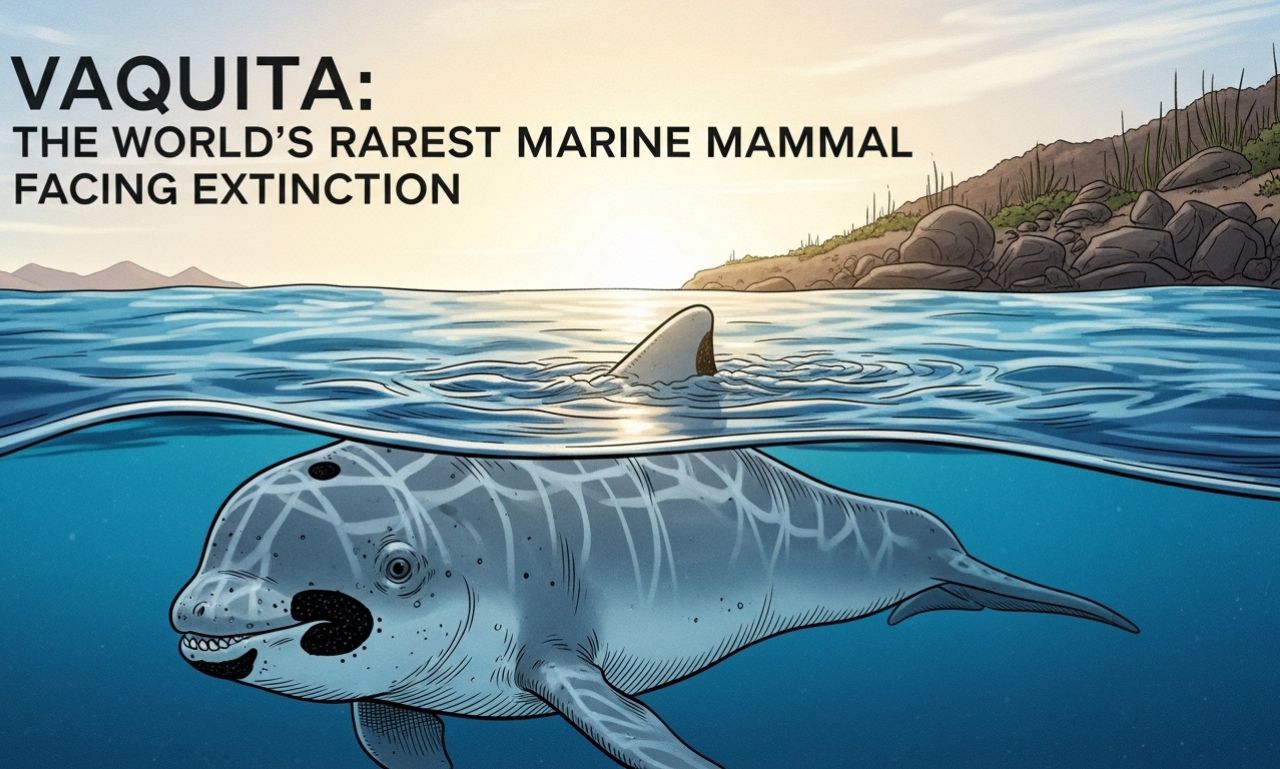
The Vaquita (Phocoena sinus) is the world’s rarest marine mammal and one of the most endangered species on Earth. This small porpoise lives only in a limited region of the Gulf of California, a body of water located between the Baja California Peninsula and mainland Mexico. Because of its extremely small population and ongoing threats from illegal fishing, scientists and conservationists are racing to prevent the species from disappearing forever.
Physical Characteristics
The vaquita is the smallest member of the porpoise family. Adult vaquitas typically grow to about 4–5 feet (1.2–1.5 meters) in length and weigh around 90–120 pounds (40–55 kg).
They are known for their distinctive features:
-
Dark rings around their eyes
-
Dark patches on the lips
-
A small, robust body
-
A tall triangular dorsal fin
Their body coloration is mostly gray, fading to lighter shades underneath. These markings give the vaquita a unique and recognizable appearance among marine mammals.
Habitat and Distribution
Vaquitas have one of the smallest geographic ranges of any marine mammal. They are found only in the northern part of the Gulf of California, particularly in shallow coastal waters.
This restricted habitat makes the species especially vulnerable. Unlike many dolphins or whales that migrate across oceans, vaquitas remain in this small region throughout their lives.
Diet and Behavior
Vaquitas are shy and elusive animals, which makes them difficult for researchers to observe. They usually swim alone or in small groups of two or three individuals.
Their diet consists mainly of:
-
Small fish
-
Squid
-
Crustaceans
Vaquitas use echolocation—a system of sound waves—to detect prey and navigate through murky waters.
Reproduction and Life Cycle of Vaquita
The reproductive rate of the vaquita is relatively slow. Females usually give birth to only one calf every two years. The gestation period is estimated to last about 10–11 months.
Newborn calves stay close to their mothers for protection and nourishment. Because of this slow reproduction rate, recovering the population is extremely difficult once numbers decline.
Why the Vaquita Is Critically Endangered
The biggest threat to the vaquita is entanglement in illegal fishing nets, particularly those used to catch the endangered Totoaba fish. Totoaba swim bladders are highly valued in illegal wildlife markets, which has led to widespread use of gillnets in the vaquita’s habitat.
When vaquitas become trapped in these nets, they cannot reach the surface to breathe and often drown.
According to conservation groups, fewer than 20 vaquitas may remain in the wild, making their survival extremely uncertain.
Organizations like the World Wildlife Fund and various international conservation groups are working to eliminate illegal fishing in the region and protect the species.
Conservation Efforts on Vaquita
Several actions are being taken to save the vaquita:
-
Banning gillnets in the Gulf of California
-
Increasing marine patrols and enforcement
-
Promoting vaquita-safe fishing gear
-
Raising global awareness about the species’ crisis
Scientists also monitor vaquita populations using acoustic devices that detect their echolocation clicks.
Despite these efforts, conservation success depends heavily on stopping illegal fishing activities.
Ecological Importance
Although small in number, vaquitas are part of a complex marine ecosystem. As predators of fish and squid, they help maintain balance in the food web. Their survival is also a strong indicator of the overall health of the Gulf of California’s marine environment.
Conclusion on Vaquita
The vaquita is a remarkable yet fragile species that symbolizes the urgent need for marine conservation. With its tiny population and restricted habitat, it faces a serious risk of extinction. Protecting the vaquita requires global cooperation, stricter enforcement against illegal fishing, and greater public awareness.
If successful conservation measures are implemented, there is still hope that the vaquita can survive and continue to inhabit the waters of the Gulf of California.