
 By zarnish zarlish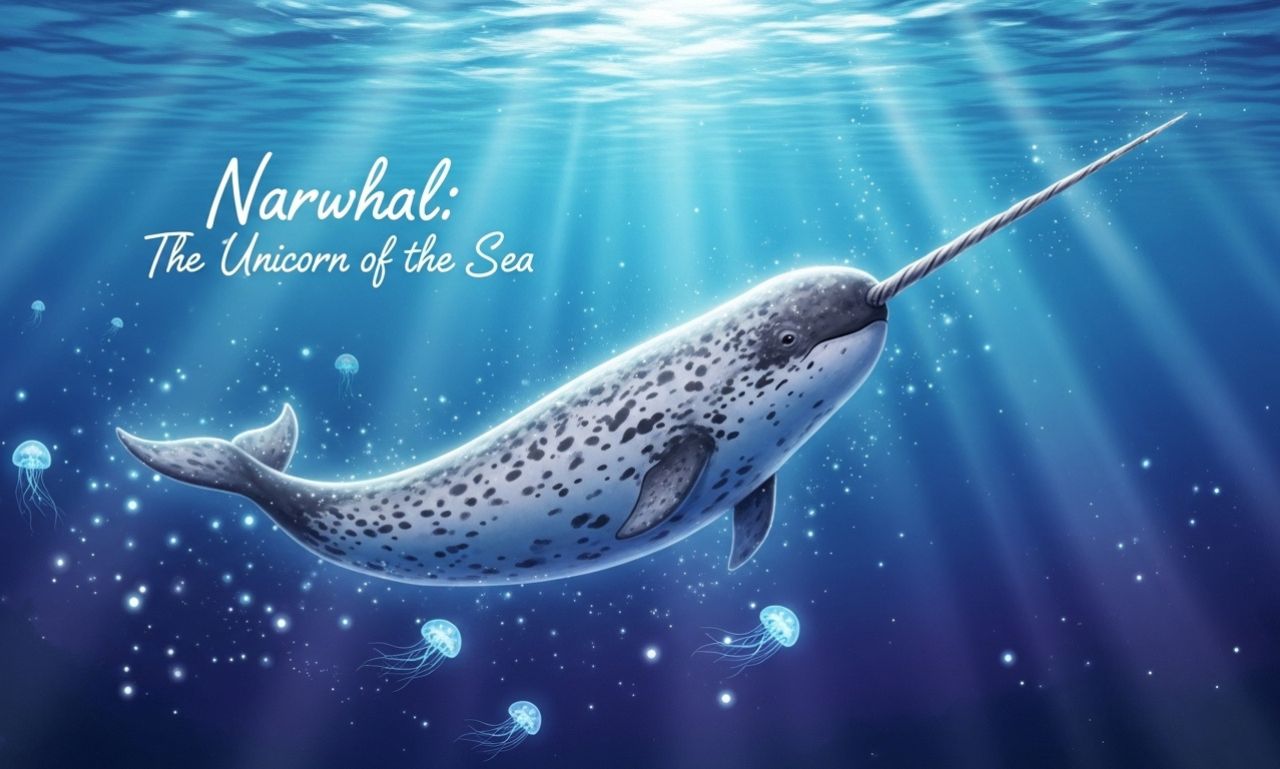
The narwhal (Monodon monoceros) is one of the most mysterious marine mammals in the world. Often called the “unicorn of the sea,” this Arctic whale is famous for its long spiral tusk that can grow several meters in length. Narwhal live in cold Arctic waters and are closely related to beluga whales.
For centuries, narwhals fascinated explorers and scientists alike. In medieval Europe, their tusks were even sold as unicorn horns, believed to possess magical powers. Today, researchers continue to study these remarkable animals to better understand their behavior, biology, and role in Arctic ecosystems.
Physical Characteristics
Narwhals have a distinctive appearance that makes them easy to recognize among marine mammals.
Key features include:
-
Long spiral tusk (actually a tooth) extending from the upper jaw
-
Mottled gray and white skin
-
Rounded head without a dorsal fin
-
Streamlined body adapted for icy waters
The Famous Tusk
The narwhal’s tusk can grow up to 3 meters (10 feet) long. It is usually found in males, though some females may develop smaller tusks.
Scientists believe the tusk may be used for:
-
Social dominance displays
-
Mating competition
-
Environmental sensing
-
Communication between individuals
Recent research suggests the tusk contains millions of nerve endings, making it a sensitive sensory organ.
Habitat and Distribution
Narwhals live primarily in the Arctic Ocean and surrounding seas.
Their range includes:
-
Waters around Greenland
-
Northern Canada
-
The Arctic Ocean
-
Parts of Russia
During winter, narwhals stay in deep offshore waters beneath thick sea ice. In summer, they migrate to coastal fjords and bays, where they gather in large groups.
Diet and Feeding of Narwhal
Narwhals are carnivorous predators that feed mainly on fish and marine organisms.
Common prey includes:
-
Arctic cod
-
Halibut
-
Squid
-
Shrimp
-
Small fish species
They can dive over 1,500 meters (nearly 5,000 feet) and remain underwater for more than 20 minutes while hunting in the deep ocean.
Social Behavior of Narwhal
Narwhals are highly social animals that usually travel in groups called pods.
Pods may include:
-
5 to 10 individuals typically
-
Sometimes hundreds during migration
Male narwhals are often seen crossing tusks, a behavior called “tusking.” This may be a way of communicating or establishing dominance rather than fighting.
Reproduction and Life Cycle
Narwhals reproduce slowly, which makes population recovery difficult if numbers decline.
Reproductive facts:
-
Gestation period: about 14–15 months
-
One calf born at a time
-
Calves stay with their mothers for over a year
-
Lifespan: up to 50 years
Young nar whals are born blue-gray and gradually develop the mottled coloration seen in adults.
Adaptations to Arctic Life
Narwhals are perfectly adapted to survive in extreme cold conditions.
Their adaptations include:
-
Thick blubber for insulation
-
Flexible rib cages to withstand deep dives
-
Ability to locate breathing holes in sea ice
-
Advanced echolocation for navigating dark waters
Unlike many whales, nar whals lack a dorsal fin, which helps them swim under ice without getting stuck.
Conservation Status of Narwhal
Nar whals are currently listed as Near Threatened by conservation organizations. While their populations are relatively stable in some areas, they face several growing threats.
Major threats include:
-
Climate change and melting Arctic ice
-
Industrial noise and shipping
-
Oil and gas exploration
-
Limited hunting by Indigenous Arctic communities
Protecting Arctic habitats is essential for the long-term survival of nar whals.
Why Narwhals Are Important
Narw hals play an important role in the Arctic marine ecosystem. As predators, they help maintain balance in fish populations. They also serve as indicators of Arctic environmental health, since changes in sea ice directly affect their survival.
Their unique tusk, deep-diving abilities, and mysterious lifestyle make narwhals one of the most fascinating creatures in the ocean.
Conclusion on Narwhal
The nar whal, often called the unicorn of the sea, is one of the most unique marine mammals on Earth. With its iconic spiral tusk, deep-diving abilities, and Arctic lifestyle, it continues to captivate scientists and ocean enthusiasts alike. Protecting narwhals and their fragile Arctic environment is essential to ensure that these remarkable whales continue to thrive in the world’s coldest oceans.