
 By zarnish zarlish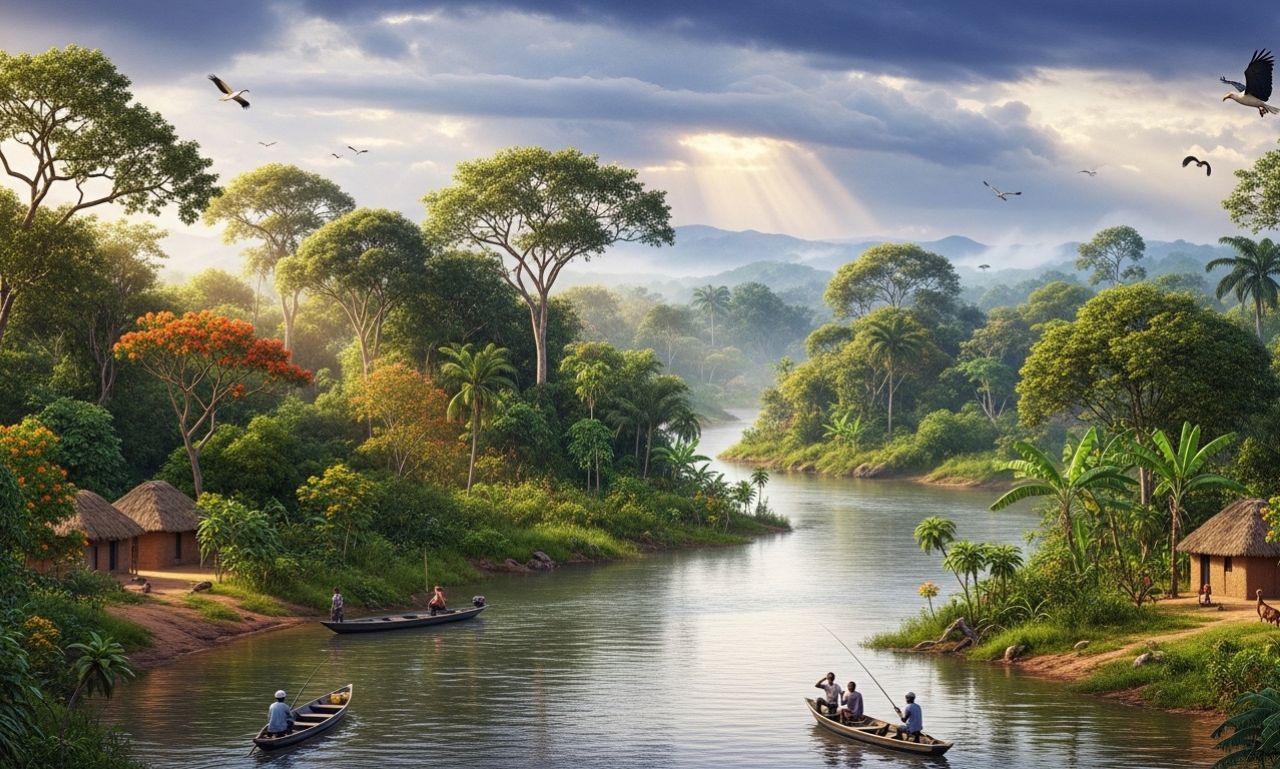
The name Congo commonly refers to the central African region surrounding the Congo River, one of the largest rivers in the world. The term is also used to describe two neighboring countries: the Democratic Republic of the Congo and the Republic of the Congo.
This region is famous for its vast rainforests, incredible biodiversity, and rich cultural heritage. The Congo area plays a crucial role in the global environment because it contains one of the world’s largest tropical forests.
Geography and the Congo Basin
The Con go Basin is the second-largest rainforest in the world after the Amazon. It covers several countries in Central Africa and contains a vast network of rivers, wetlands, and forests.
The Con go River is the heart of this region. It is the second-longest river in Africa and the deepest river in the world, stretching over 4,700 kilometers (2,920 miles).
This river supports transportation, fishing, agriculture, and local communities throughout the region.
The Two Congo Countries
Democratic Republic of the Congo
The Democratic Republic of the Con go (DRC) is the larger of the two countries and one of the biggest nations in Africa. Its capital city is Kinshasa.
The country is known for:
-
Huge mineral resources
-
Vast tropical forests
-
Diverse wildlife
Republic of the Congo
The Republic of the Con go, sometimes called Con go-Brazzaville, lies to the west of the DRC. Its capital is Brazzaville.
Although smaller, it also contains important rainforest ecosystems and wildlife habitats.
Wildlife and Biodiversity
The Con go region is one of the most biodiverse places on Earth. The forests are home to many rare and endangered animals, including:
-
Mountain Gorilla
-
African Forest Elephant
-
Okapi
-
Chimpanzee
These species depend on the dense forests and protected habitats found across the Con go Basin.
Culture and People of Congo
The Con go region is home to hundreds of ethnic groups and languages, creating a rich cultural diversity. Music, dance, storytelling, and traditional art play an important role in everyday life.
One of the most famous musical styles from the region is Soukous, which has influenced African music worldwide.
Natural Resources and Economy
The Con go region is rich in natural resources such as:
-
Copper
-
Cobalt
-
Diamonds
-
Timber
These resources contribute to the economies of both countries, although managing them sustainably remains an important challenge.
Environmental Importance of Congo
The Con go Basin rainforest is often called “the lungs of Africa.” It absorbs large amounts of carbon dioxide and helps regulate the global climate.
Protecting the forest is essential for:
-
Combating climate change
-
Preserving biodiversity
-
Supporting millions of people who rely on forest resources
Many international conservation organizations work in the region to protect wildlife and forests.
Challenges Facing the Congo Region
Despite its natural wealth, the Con go region faces several challenges:
-
Deforestation
-
Illegal mining and logging
-
Political instability in some areas
-
Wildlife poaching
Efforts are ongoing to improve conservation, governance, and sustainable development.
Conclusion on Congo
The Con go region is one of the most important ecological and cultural areas in the world. With its vast rainforests, powerful rivers, and extraordinary wildlife, it plays a vital role in the health of the planet. Protecting the Congo Basin and supporting sustainable development are essential steps toward preserving this remarkable region for future generations.