
 By zarnish zarlish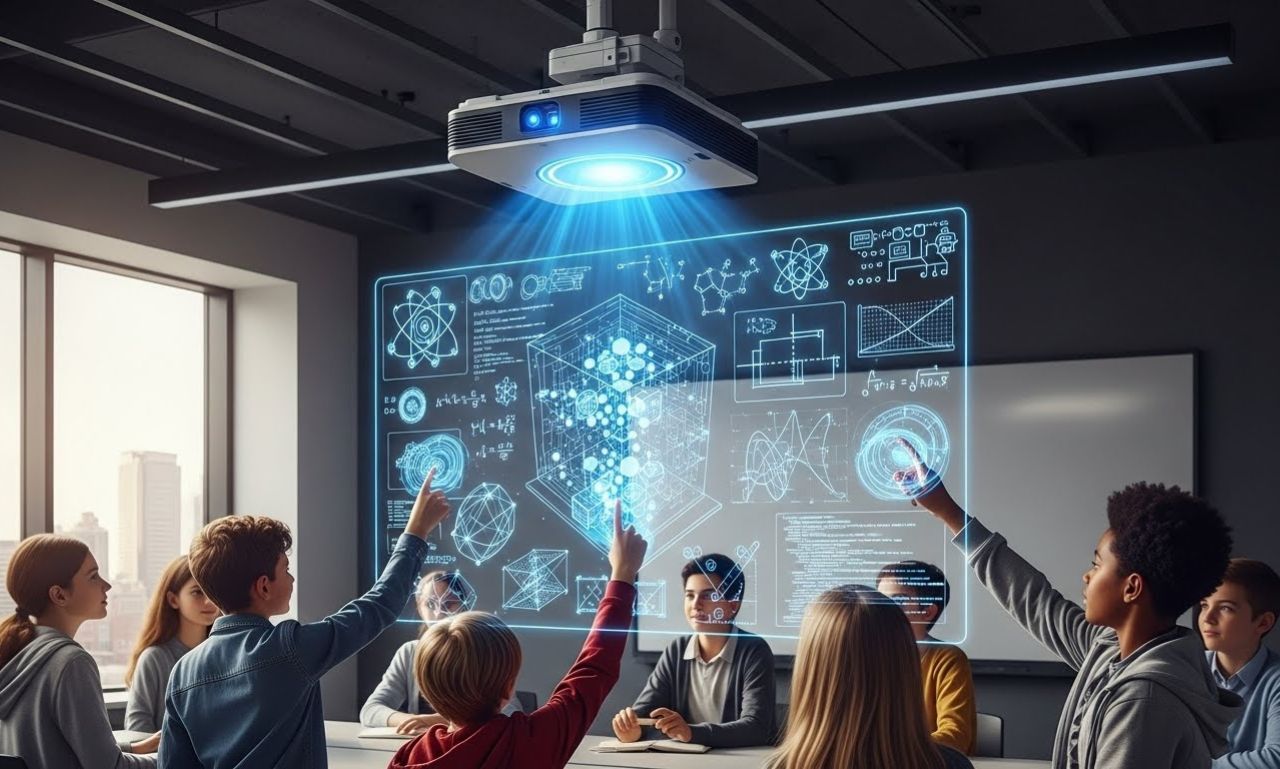
In today’s rapidly evolving educational and professional landscape, technology plays a crucial role in enhancing engagement, learning, and communication. One of the innovations that has been gaining attention is the stem projector. This advanced device is not just another projector—it is designed to bring interactive, high-quality, and immersive experiences to classrooms, laboratories, offices, and entertainment spaces.
In this article, we will explore what a stem projector is, how it works, its applications, advantages, and why it is becoming a must-have tool for modern educators and professionals.
What Is a Stem Projector?
A stem projector is a projection device that combines traditional projection capabilities with advanced features such as interactive STEM (Science, Technology, Engineering, Mathematics) applications, 3D modeling, and touch-enabled interactivity. Unlike regular projectors that only display content, stem projectors allow users to interact with digital content directly, making them highly suitable for educational and professional settings.
The term “stem” in stem projector often reflects its emphasis on STEM education, focusing on hands-on learning in subjects like mathematics, physics, biology, and engineering. These projectors can be used to display simulations, models, and multimedia content that students or audiences can manipulate in real time.
How Does a Stem Projector Work?
Stem projectors operate similarly to standard projectors in terms of displaying images or videos. However, their distinguishing features include:
-
Interactive Capabilities:
Many stem projectors come with touch or motion-sensing technology, allowing users to annotate, rotate 3D models, or manipulate interactive simulations on the projected surface. -
High-Resolution Projection:
Stem projectors often support HD, Full HD, or 4K resolution, ensuring that detailed diagrams, charts, and scientific models are clearly visible. -
Wireless Connectivity:
Users can connect smartphones, tablets, laptops, or cloud platforms wirelessly, enabling seamless sharing of content without the clutter of cables. -
3D and Augmented Reality (AR) Support:
Some advanced models integrate AR and 3D capabilities, allowing educators to project life-like models of molecules, anatomical structures, or engineering designs, making abstract concepts tangible. -
Multi-User Interaction:
Certain stem projectors support simultaneous interaction by multiple users, making them ideal for collaborative learning or group presentations.
By combining these features, stem projectors transform traditional projection into an immersive and participatory experience.
Key Features of a Stem Projector
When choosing a stem projector, understanding its key features can help ensure you get the best device for your needs. Some important features include:
-
High Lumen Output: Ensures bright and clear images even in well-lit rooms.
-
Interactive Touch or Motion Sensors: Enables hands-on engagement with projected content.
-
3D Projection Capabilities: Allows visualization of complex structures in science, technology, and engineering.
-
Wireless Screen Sharing: Simplifies the process of connecting multiple devices.
-
Compatibility with STEM Software: Supports educational tools and apps for interactive learning.
-
Portability: Lightweight and compact models are ideal for classrooms and mobile presentations.
Applications of Stem Projectors
Stem projectors have a wide range of applications across education, professional development, entertainment, and research.
1. STEM Education
In classrooms, stem projectors bring abstract concepts to life. Teachers can project interactive 3D models of:
-
The human anatomy in biology
-
Chemical molecules in chemistry
-
Planetary systems in astronomy
-
Engineering prototypes or robotics designs
This hands-on learning improves comprehension, retention, and student engagement, making STEM subjects more approachable and fun.
2. Corporate and Professional Presentations
In corporate environments, stem projectors can enhance presentations by providing:
-
Interactive charts and graphs
-
Live annotations on reports and slides
-
3D visualization for product designs or architectural plans
The ability to manipulate content in real time allows teams to collaborate more effectively and make data-driven decisions faster.
3. Research and Laboratories
Stem projectors are increasingly used in research facilities to:
-
Display simulation data in real time
-
Visualize molecular structures, chemical reactions, or engineering stress tests
-
Share collaborative analysis among research teams
By integrating interactive projection, stem projectors enable scientists and engineers to better understand complex phenomena.
4. Entertainment and Media
While education and professional uses dominate, stem projectors also find applications in entertainment:
-
Interactive gaming experiences
-
Virtual reality (VR) or AR projection for immersive environments
-
Home theaters with motion-sensitive interaction
These projectors elevate traditional entertainment by creating dynamic, participatory experiences.
Advantages of Using a Stem Projector
There are several key benefits of using stem projectors in educational, professional, and personal settings:
-
Enhanced Engagement:
Interactive projection captures attention better than static slides or blackboards, encouraging active participation. -
Improved Understanding of Complex Concepts:
3D visualization and AR features allow users to explore and manipulate models, making learning more intuitive. -
Collaboration:
Multi-user support encourages teamwork and collaborative problem-solving, both in classrooms and offices. -
Portability and Convenience:
Modern stem projectors are compact, lightweight, and easy to set up, making them ideal for mobile presentations. -
Versatility:
Can be used for education, corporate presentations, research, and even entertainment. -
Reduced Paper Usage:
Digital projection allows for interactive note-taking and content sharing without printed materials, supporting eco-friendly initiatives.
How to Choose the Right Stem Projector
When selecting a stem projector, consider the following factors:
-
Resolution: Higher resolution ensures clearer visuals for detailed diagrams and 3D models.
-
Brightness (Lumens): A higher lumen rating is essential for rooms with ambient light.
-
Interactivity: Decide whether touch, motion, or stylus input is required.
-
Portability: Consider size and weight for mobile setups.
-
Connectivity: Ensure compatibility with Wi-Fi, Bluetooth, or HDMI connections.
-
Software Support: Check if it supports your preferred educational or professional applications.
-
Price and Warranty: Balance features with budget and look for products with reliable support.
Top Use Cases in Modern Classrooms
Modern classrooms increasingly rely on technology to improve learning outcomes. Stem projectors are particularly impactful in:
-
Math and Physics Classes: Demonstrating geometric shapes, vectors, or forces using interactive models.
-
Biology Lessons: Exploring the human body, cells, or DNA structures in 3D.
-
Chemistry Labs: Visualizing molecules, chemical reactions, or lab simulations.
-
Engineering and Robotics: Projecting prototypes, CAD designs, or robotics operations for hands-on learning.
By integrating stem projectors, educators can shift from traditional lecture methods to experiential learning, where students actively participate in the exploration process.
Stem Projector vs Traditional Projector
While traditional projectors display content on a screen, stem projectors offer:
| Feature | Traditional Projector | Stem Projector |
|---|---|---|
| Interactivity | Low | High |
| 3D/AR Support | Limited | Yes |
| STEM Education Integration | Minimal | Strong |
| Collaboration | Limited | Multi-user support |
| Device Connectivity | Usually wired | Wireless & cloud integration |
| Engagement | Passive | Active & participatory |
As shown, stem projectors are far more suitable for environments requiring interactive, collaborative, and immersive experiences.
The Future of Stem Projectors
With the growth of interactive learning, remote education, and immersive technology, stem projectors are likely to become a standard tool in classrooms, labs, and offices. Future developments may include:
-
AI Integration: Personalized learning experiences and adaptive content suggestions.
-
Advanced AR/VR Support: Fully immersive simulations for STEM education.
-
Cloud Collaboration: Seamless sharing of interactive content between locations.
-
Eco-Friendly Designs: Energy-efficient projectors for sustainable classrooms.
As technology continues to evolve, stem projectors will play a key role in bridging the gap between theoretical knowledge and practical understanding.
Conclusion
The stem projector represents a significant leap forward in interactive technology for education, professional settings, and entertainment. By combining high-resolution projection, interactivity, 3D visualization, and multi-user collaboration, stem projectors enhance learning, communication, and engagement like never before.
For educators, students, researchers, and professionals seeking innovative ways to present and interact with content, stem projectors are no longer optional—they are an essential tool for modern, hands-on, and immersive experiences.
As the world moves toward more interactive and technology-driven learning, adopting stem projectors will ensure users stay ahead of the curve and fully harness the potential of digital education and presentation tools.